In the near future, the world will face one of the greatest threats
it has ever known. It will not be of extra-terrestrial highly organized, called
Mimics (reference to The Edge of Tomorrow movie). This threat reduces cities to nothing and
cause the death of millions of human beings. No army in the world will be able
to compete with the speed, violence and exceptional cognitive abilities of
climate change. This is not the synopsis of the next Spielberg’s film but the
prediction of Dyer (2008) in his book Climate Wars. After reading this
book, I had the urge to report any scenario he imagined and give you my opinion
on these scenarios.
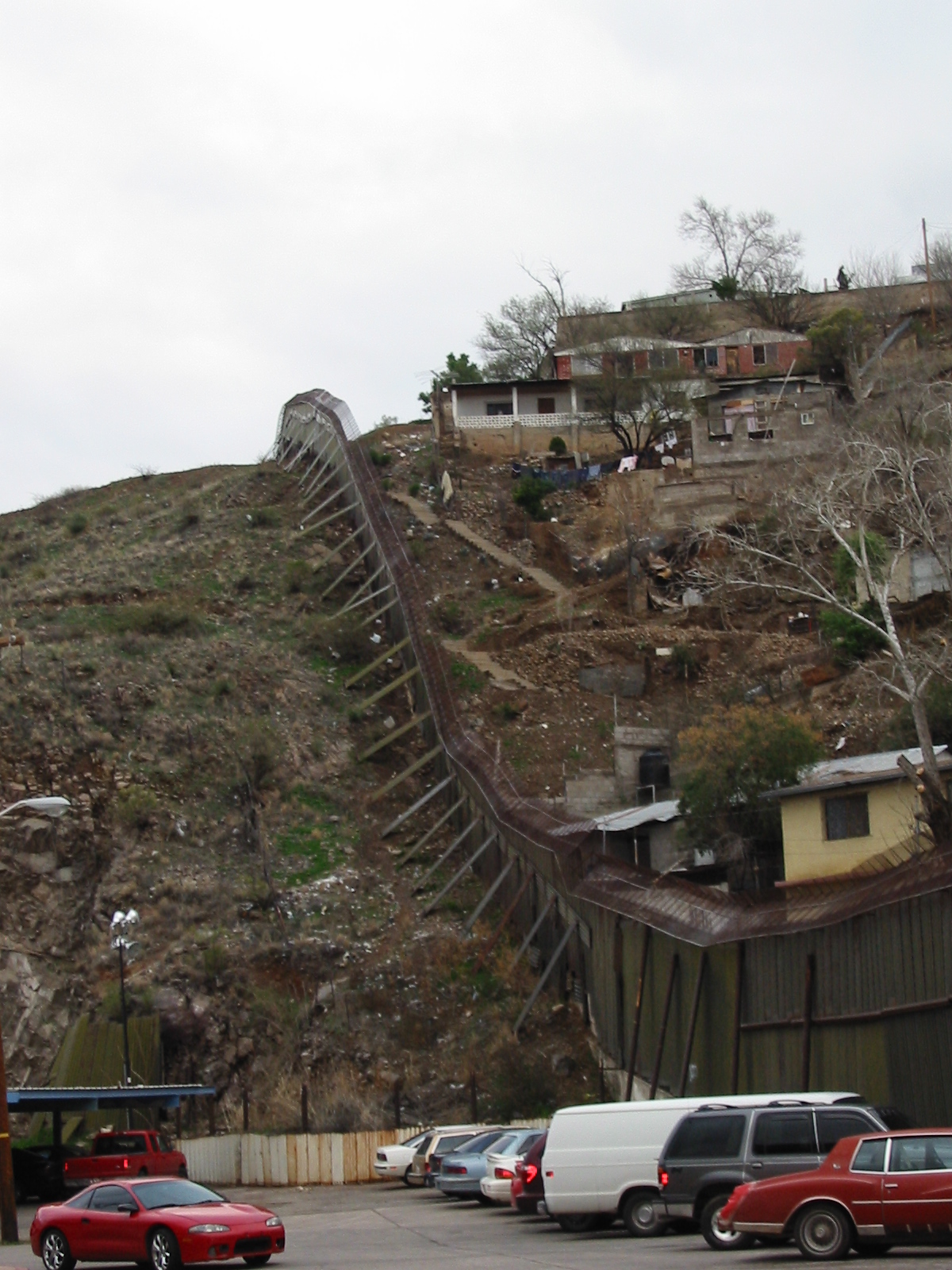 |
| US-Mexican border, Arizona. USA is in the right hand side. |
1- Mexico central government Collapse and the construction of an “Iron Curtain” on the US-Mexican border
The Mexican and Central
American societies will face a dramatic drought in the near future. The US and Mexico share the Sonoran desert. The desert may be expected to expand in a
warming world, leading to a serious impairment of agriculture, and to a
fiasco of the Mexican government. The result is a massive wave of migration to
USA. From that flows the closing of the border with “Iron Curtain”-style
barricades, including automated machine gun posts and anti-personnel mines.
2- Collapse of in southern sub-Saharian Africa
In sub-Saharan countries, people will increasingly die because of
malnutrition, (water) diseases and strife. This is due to exacerbation of the
drought combined with the lack of infrastructures. This will lead to central
government's failure and to and massive wave of refugees. Dyer (2008) predicted the same
type of collapse in China. In addition of the Collapse of central government, a
civil war will burst in China.
3- Nuclear exchange between Israel and Iran
In the Middle East, the population will extremely grow while the freshwater
supplies will dramatically decreases. This will lead to an exacerbation of
conflicts already existing. "Attempts at an Israeli-Palestinian peace
settlement will be abandoned indefinitely because of a collective conclusion
that the problem of sharing water supplies must be regarded as permanently
intractable" (Dyer, 2008). Middle East countries will resort, more and
more, to nuclear energy for the seawater desalination. This will encourage the
nuclear weapons as insurance against predation"(Dyer, 2008).
[ Want to Know More? ]

oh dear this all sounds very bleak! do u thinks its inevitable there will be water wars in the future or do u think we would come up with solution by then ?
ReplyDeleteThis is not a black or white answer. Fell free to have a look on my réflective post, I tried to give some answers.
DeleteHave you looked at historical collapses of civilisations and the correlation between loss of water with societal-failure?
ReplyDeleteFollowing your second "quote and tips", agriculture accounting for 70% of water usage globally, is it inevitable we will face collapse? Is there no technological innovation or socio-political/economic changes that can address water scarcity?
DeleteHow Technology Could Contribute to a Sustainable World? Have a look on the other articles I posted. I have tried to show that social helmsmanship of technological innovation in the direction of sustainability is a very challenging task. It calls for changes in attitude in the scientific community, raising awareness in the general population, the development of better methods of monitoring and forecasting in academia and government, and, most importantly, ethics and social responsibility to be much more highly valued in general than they are at present. It calls, above all, for changes in the forces that drive scientific and technological innovations—the funding systems, the military and business interests, and consumers. It calls for greater transparency of scientific and technological enterprises, enabling societal actors to better monitor and assess, to forecast and to influence developments at an early stage. It calls for new and comprehensive visions of the scientific and technological foundations of a society of the future, one which is sustainable, attractive, and fulfills human needs and aspirations. It calls for backcasting and social experimentation and for new forms of governance.
Delete