ABOUT ME !

Hi! I am Radhia, an affiliate student at UCL. My major is Environment and Urban Planning Studies with a focus on water. I will be using this blog to talk about freshwater and societies. I will examine the link between the geopolitical aspect and the climate vulnerability by assessing different geographic regions. I will see how climate vulnerability link with possible future conflicts. I hope you will enjoy my blog!


Sunday, 30 November 2014

Bassin at Risk: Conflict and Cooperation over International Freshwater Ressources

Today, I want to talk about the The Basins at Risk project (BAR) developed by Wolf (2001). He talked about the link between freshwater resources and conflict-in essence for all countries from1948-1999. His work represents a unique resource that allow the evaluation of historical incidents of water conflict, cooperation and exploration for relationships. The research has three goals: 
  • To identify historical indicators of international freshwater conflict and cooperation,
  • To use these indicators to create a framework to identify and evaluate international river basins at potential risk for future freshwater conflict,
  • To enhance understanding of the driving forces that may cause water to become a focus of conflict or cooperation.

Extreme Cooperative Event by area, Aaron T. Wolf (2001).

Extreme Conflictive Event by area, Aaron T. Wolf (2001).


Those figures show international freshwater treaties. These treaties cover a wide range of issues areas, with emphasis on water quality and quantity, hydropower, joint management and economic development. The most extremely conflictive events are exclusively related to water quantity. 

 (Wolf, 2001)

The African region reveals the lowest level of cooperation, while Western Europe shows the highest. In terms of number, the majority of international relations over freshwater resources are cooperative.

If you look at the cooperation involving several countries it seems that the quality of the water and the economical development are more predominant than water quantity and infrastructures. This fact could be explained due to high difficulties in getting transnational agreements on the quantity of water. It seems that economic development ensures more mutual benefits.

According to Wolf (2001) “Such differences point to areas where one approach, multiple vs. bilateral, may be more appropriate than the other, in attempting to develop institutional mechanisms to facilitate negotiation and management of international freshwater resources.”
                                        [ Want to Know More? 
Wolf, 2001, click here 


Saturday, 22 November 2014

Overview of violence related to water scarcity

In one of my previous articles, I addressed the concept of social resilience or social ingenuity, developed by Homer-Dixon (1995) and Ohlsson (1998). If Qatar was able to know how to use its comparative advantage, it is not the same for other societies less resilient. Today I will make an overview of violence related to water due to the fact that the country was not resilient enough.

( United Nations, 2013)

On July, 6th 2000, thousands of North China Plain farmers have violently clashed with police. Their anger was the result of a government project that arbitration allocating water tanks of some cities and industries rather than meeting the needs for irrigation (Postel and Wolf, 2001) The same month, farmers attacked the construction of a dam rehabilitation: them of it leaks allowed to cultivate their parched lands (Brown, 2000)

In April 2001, violent protests erupted in Karachi. The tensions are more and more rising between Pakistani provinces of Punjab and Sindh on sharing the waters of the Indus (Sawaal News, 2001). These rivalries between the two provinces of Pakistan, are related with water management in the basin. But also accelerated degradation by salinization of agricultural land in Pakistan, does not bode good for the stability of a fragile state facing a growing Islamist opposition. 

In Darfur, the drying of the region highlighted the competition between sedentary farmers and herders, stirring the seeds of the current conflict began in 2003 and exploited by others and the central government in Khartoum. The Organization of African Unity recognized the important role of conflict over access to water in the outbreak of civil war.
From the examination of these conflicts, ancient or modern, it appears that tensions are favoured when the way to use water overlaps of ethnic differences and / or religious.


                                             [ Want to Know More?
Sandra Postel et Aaron Wolf, « Dehydrating Conflict  », Foreign Policy, septembre-octobre 2001, version Internet.
 Lester Brown, « How Water Scarcity Will Shape the New Century », 14 août 2000, EarthTrends.
Sawaal News, 19 avril 2001, hhttp:// news. sawaal. com/ 19-Apr-2001/ International/ 41. htm,document consulté le 28 novembre 2001.

Desalination: a solution for water scarcity?

Today, I would like to bring your attention to a paper I read about desalination. I touched on it briefly in one of my previous posts. What is the relations between improvement in efficiency and environmental impact?
(Climate Tech Wikipedia image, 2014)

Desalination also can play a role in peace 

Jordana Fremed (2014), intern in Columbia College, argued that “desalination provides important source of scarcedrinking water in Israel.” Indeed, one solution to adapt to water scarcity in this area is desalination. She supports that desalinisation helps the country adapt to decreasing water availability and climate change, desalination also can play a role in peace efforts in the region. 
Sierra Club, angeles2.sierraclub

Through desalination, additional water can be provided to the Palestinian side by sharing of treated water. Although the benefits of desalination are obvious but we should be careful with this process. Indeed, there is an increasing concern about desalination's negative impacts on the environment. 

Desalination has a negative impact on the environment and the preservation of ecosystems.

According to the results of the study of Benmoussat and Habi (2014) , the production of fresh water by unconventional methods such as desalination of seawater is characterised by the parallel production of water highly charged with salt brine. Releases of highly charged brines have the effect of varying the chemical composition of sea water which alters the balance of ecosystems and the marine environment. The decrease in dissolved oxygen concentration from the results of this study has an impact on the lives of marine species. "Should -it guide the selection of a desalination process by considering a neutralisation station brine before its release to the wild. Studies have shown that the RO reverse osmosis process the same problems." (Benmoussat and Habi, 2014, p.50)
The parameters evaluated for brine water discharged at sea was very high compared to the standard values, which negatively affects the marine environment.
Lattemann and Thomas (2008), supported that “different water supply options should be balanced on the scale of regional management plans. They recommend evaluating and minimizing the effects of desalination projects in order to investigate the environmental impacts of each project. A first step in this direction has been taken by the World Health Organization (WHO), which has initiated a project and established five technical work groups for the preparation of a Guidance Document on Desalinationfor Safe Water Supply.


                                          [ Want to Know More?

- Benmoussat and Habi, ;2014, Desalination processes of the sea water and their environmental impact, http://share.ensh.dz/index.php/ljee/article/view/573

Thursday, 20 November 2014

"This is the situation in Qatar: … We only have two days of water reserve, we import 90 percent of our food, and we only cultivate less than one percent of our land." F. Al-Attiya

Ohlsson (1998) distinguishes the water resource itself from the social resource. A  society facing an increasing scarcity of resource can survive without necessarily see its prosperity suffering. How? By mobilizing its "social resilience" according to Ohlsson (1998) or its " ingenuity "by Homer-Dixon (1995). In this sense, the scarcity of water is not the same as poverty in water. Consumption of water and the needs it induces are dependent on technology and procurement. To illustrate this distinction, let's talk about Qatar. Referring to Fahad Al-Attiya (2011),  Qatar has only two days of water reserve,  90 % of the food is imported, and farmers only cultivate less than on 1% of the land.
(Go Nomad, 2014)

Energy is the key factor here.


The question is: How could Qatar survive? "We have no water whatsoever. Simply because of this gigantic, mammoth machine called desalination. Energy is the key factor here. It changed everything. It is that thing that we pump out of the ground, we burn tons of, probably most of you used it coming to Doha. So that is our lake, if you can see it. That is our river. That is how you all happen to use and enjoy water. This is the best technology that this region could ever have: desalination." Al-Attiya(2011)

Is there a sustainable solution? 

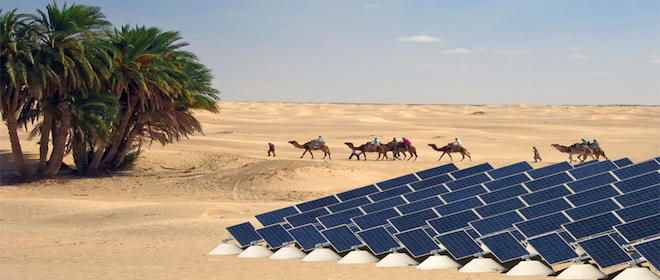
We understand that Qatar need energy. The country does not have freshwater but it has a competitive advantage being its solar energy potential due to the fact that Qatar is sunny 300 days out of 365. This is how Qatar mobilize its "social resilience" and its “ingenuity ". That renewable energy allowed the country to fulfil the water it needs. Al-Attiya (2011) argued in his TedTalk, "we will probably put 1,800 megawatts of solar systems to produce 3.5 million cubic meters of water. And that is a lot of water. "


                                           [ Want to Know More?

Leif Ohlsson, 1998, Managing Water Scarcity.

Thomas Homer-Dixon, 1995, Population and Development Review, p. 588-589.

Sunday, 9 November 2014

2045, the Inevitable Crisis


In the near future, the world will face one of the greatest threats it has ever known. It will not be of extra-terrestrial highly organized, called Mimics (reference to The Edge of Tomorrow movie). This threat reduces cities to nothing and cause the death of millions of human beings. No army in the world will be able to compete with the speed, violence and exceptional cognitive abilities of climate change. This is not the synopsis of the next Spielberg’s film but the prediction of  Dyer (2008) in his book Climate Wars. After reading this book, I had the urge to report any scenario he imagined and give you my opinion on these scenarios.

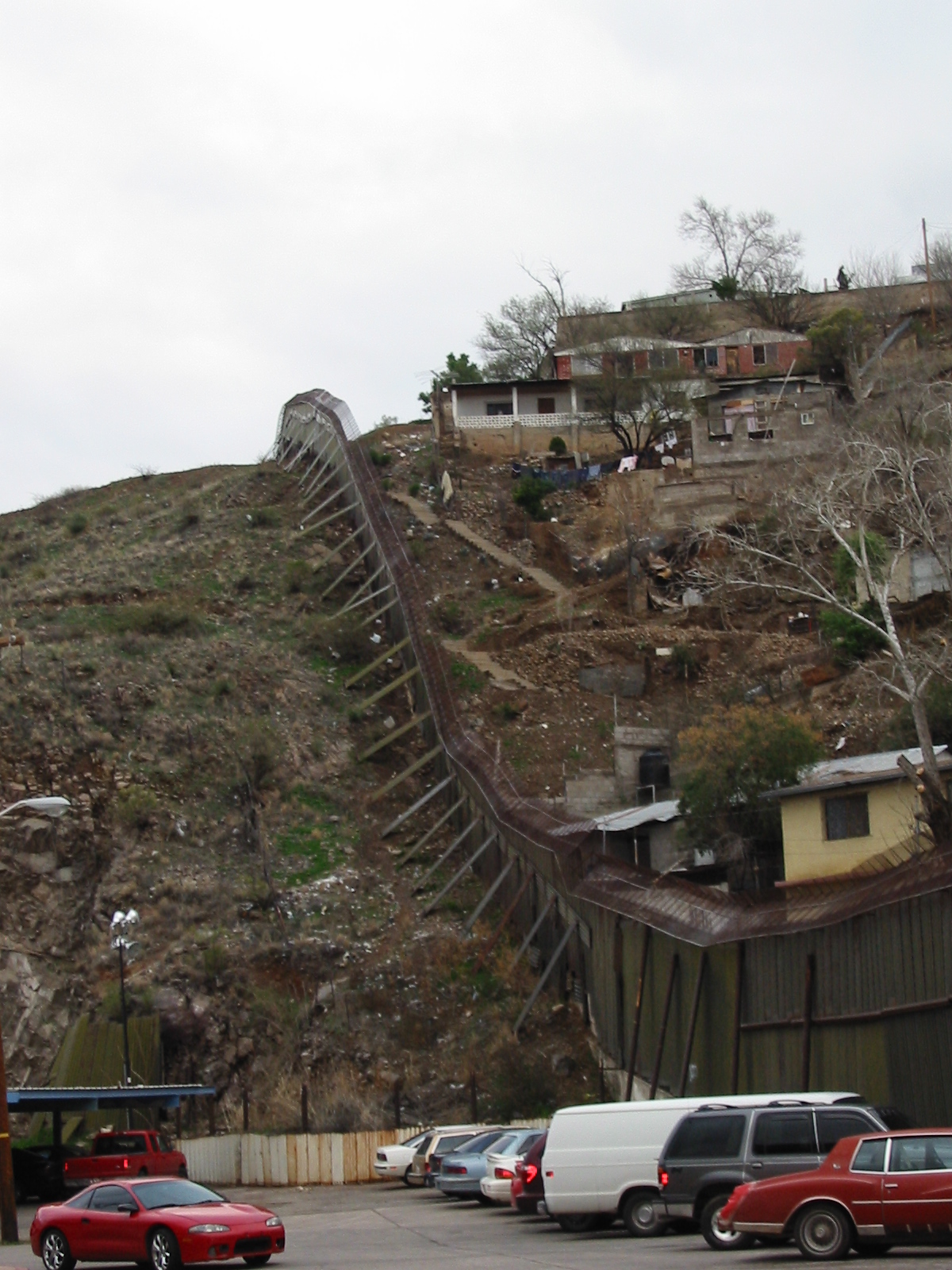
US-Mexican border, Arizona. USA is in the right hand side.

1- Mexico central government Collapse and the construction of an “Iron Curtain” on the US-Mexican border

The Mexican and Central American societies will face a dramatic drought in the near future. The US and Mexico share the Sonoran desert. The desert may be expected to expand in a warming world, leading to a serious impairment of agriculture, and to a fiasco of the Mexican government. The result is a massive wave of migration to USA. From that flows the closing of the border with “Iron Curtain”-style barricades, including automated machine gun posts and anti-personnel mines.

2- Collapse of in southern sub-Saharian Africa


In sub-Saharan countries, people will increasingly die because of malnutrition, (water) diseases and strife. This is due to exacerbation of the drought combined with the lack of infrastructures. This will lead to central government's failure and to and massive wave of refugees. Dyer (2008) predicted the same type of collapse in China. In addition of the Collapse of central government, a civil war will burst in China.

3- Nuclear exchange between Israel and Iran


In the Middle East, the population will extremely grow while the freshwater supplies will dramatically decreases. This will lead to an exacerbation of conflicts already existing. "Attempts at an Israeli-Palestinian peace settlement will be abandoned indefinitely because of a collective conclusion that the problem of sharing water supplies must be regarded as permanently intractable" (Dyer, 2008). Middle East countries will resort, more and more, to nuclear energy for the seawater desalination. This will encourage the nuclear weapons as insurance against predation"(Dyer, 2008).


                                      Want to Know More? ]